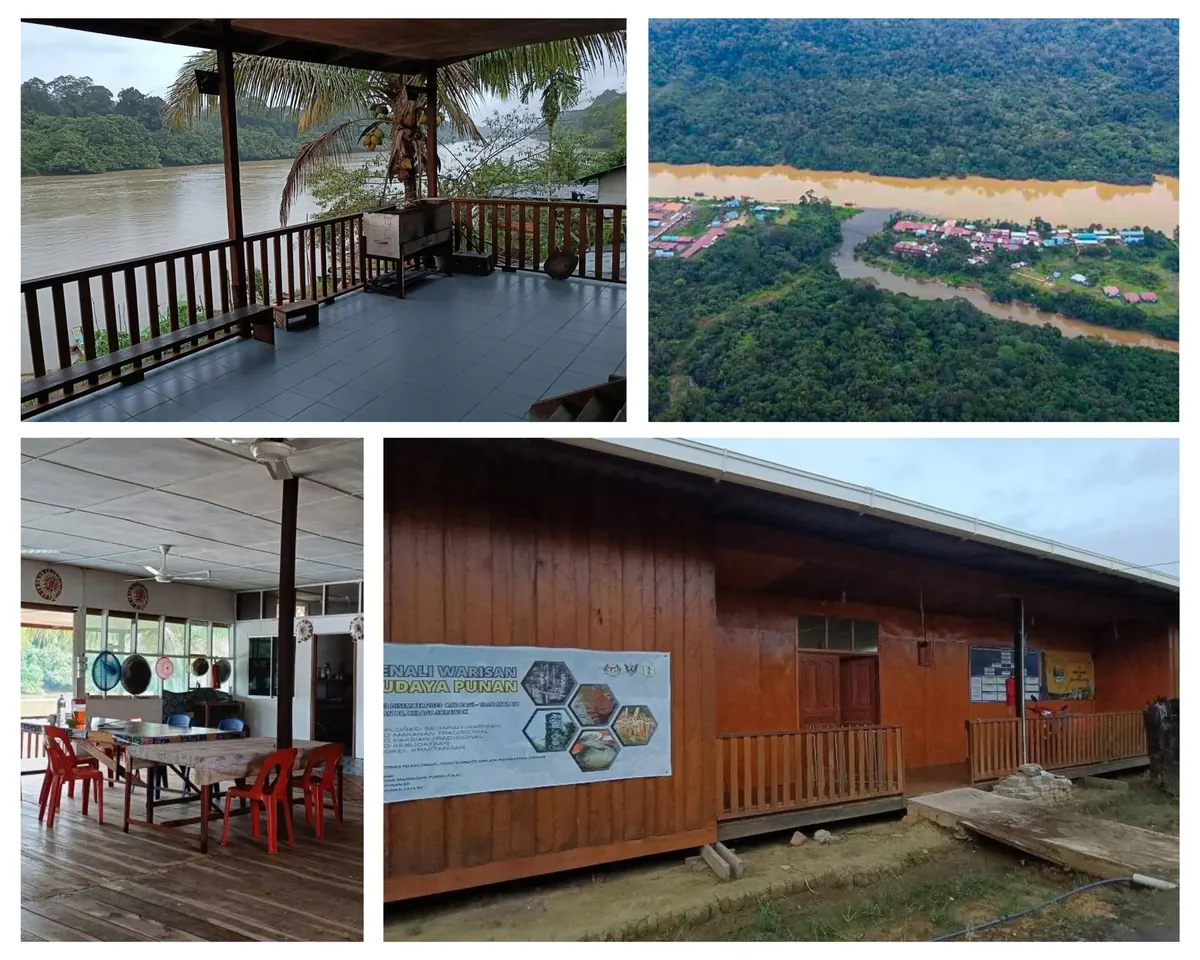
Punan Data Ba Guest House
Live like the Indigenous Punan Ba people on the banks of the mighty Rajang River.
Stay with us
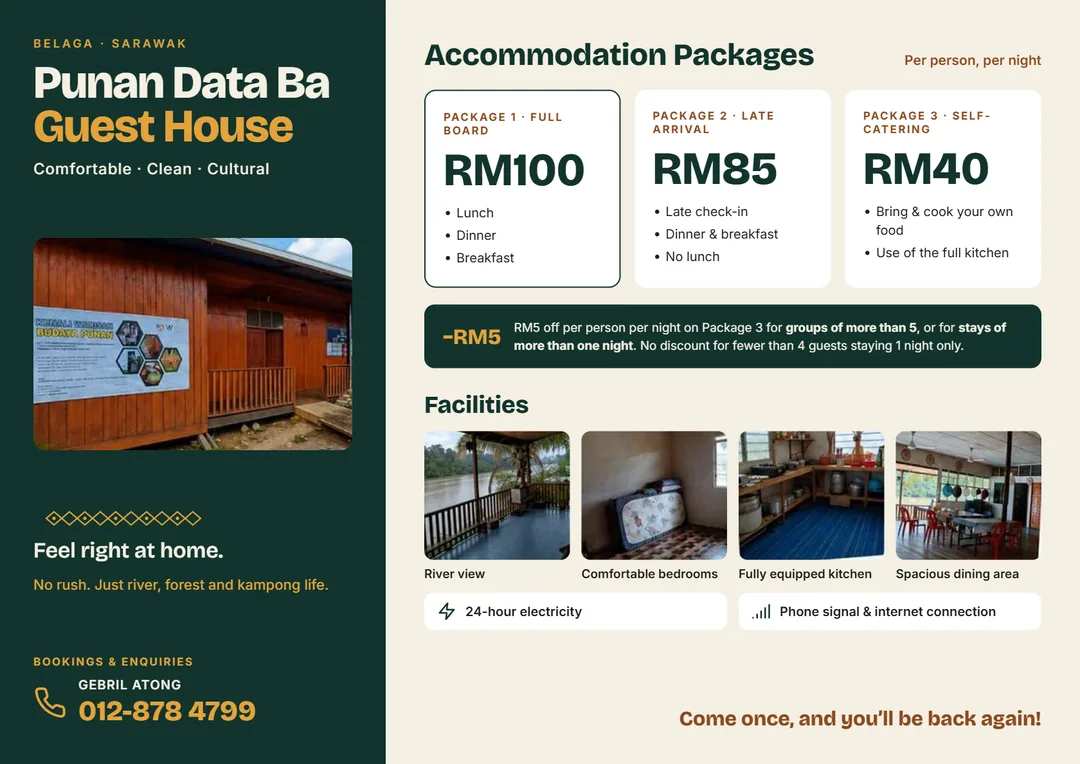
Simple, clean rooms in our village guest house, with home-cooked meals from our kitchen. All prices are per person, per night.
Packages
Per person, per night
-
Package 1 · Full board
RM100
- Breakfast, lunch and dinner
-
Package 2 · Late arrival
RM85
- Late check-in
- Dinner and breakfast
- No lunch
-
Package 3 · Self-catering
RM40
- Bring and cook your own food
- Use of the full kitchen
RM5 off per person per night on Package 3 for groups of 5 or more, or for stays of more than one night. No discount for groups of 4 or fewer staying one night only.
Our rooms
- 3 mattresses in each room, with pillows and blankets
- Room size about 12 × 10 feet (3.7 × 3 m)
- A ceiling fan in every room
- 2 electric sockets in every room
Facilities
- Veranda with a view of the Rajang River
- Fully equipped kitchen
- Spacious dining area
- 24-hour electricity
- Phone signal and internet connection (can sometimes drop out)
To book, message us on WhatsApp or call us. You can pay in cash when you arrive, or by bank transfer at least 1 day before your arrival. See our contact details
Things to do
Explore the river, the forest and kampong life with people from our village. Two people from our kampong go with you on every activity, except the village tour, which needs only one guide.
- River trips
- Jungle walks
- Village tour
- Fishing
- Night activities: frog and wildlife spotting along the river
- Collecting jungle products
Activity fees
-
Village tourist guide (for each guide)
RM150 per day
RM100 per day if the activity starts after 12 noon.
-
River trip by boat to the Kelirieng sites outside the village and the Alet rapid (Giam Alet)
RM120 per boat
Each boat takes 2 to 3 guests, plus the boat operator and a village guide.
- Please book your activities at least 3 days before you arrive at Punan Data Ba.
- All activities depend on our village people being available.
Plan your visit
Punan Data Ba is open all year. Here is what to expect from the weather and the river, and what to pack.
Best time to come
Drier months (usually June to August)
Less rain and a lower, calmer river. A good time for river trips, fishing and jungle walks. When the Rajang runs very low, sandbanks and rocks appear, and some boat trips can take longer.
Wetter months (usually November to February)
Heavier rain, and the Rajang can rise quickly. Floods sometimes happen. River trips may be changed or cancelled for your safety, but village life and the high river are a sight of their own.
With climate change, the weather here is less predictable than it used to be, so these seasons are only a guide. Message us before you travel and we will tell you how the river is.
What to bring
- Toiletries and a towel
- Enough cash for your stay and activities
- Light, quick-drying clothes, plus long sleeves and long trousers for jungle walks
- A raincoat or umbrella
- Sandals that can get wet, and good walking shoes for the jungle
- Insect repellent, sunscreen and a hat
- A torch or headlamp for night activities
- A waterproof bag for your phone and things on boat trips
- Any personal medicines you need
We do not provide toiletries or towels, so please bring your own.
Medical help nearby
- Our village has a modern government clinic, Klinik Desa Punan Bah.
- The clinic has permanent staff: an Assistant Medical Officer, a nurse and support staff.
- Doctors from the Belaga District clinic regularly come to work at our clinic.
- A 4WD ambulance can take patients to the clinic in Belaga or to Bintulu Hospital.
Life at Punan Data Ba Guest House
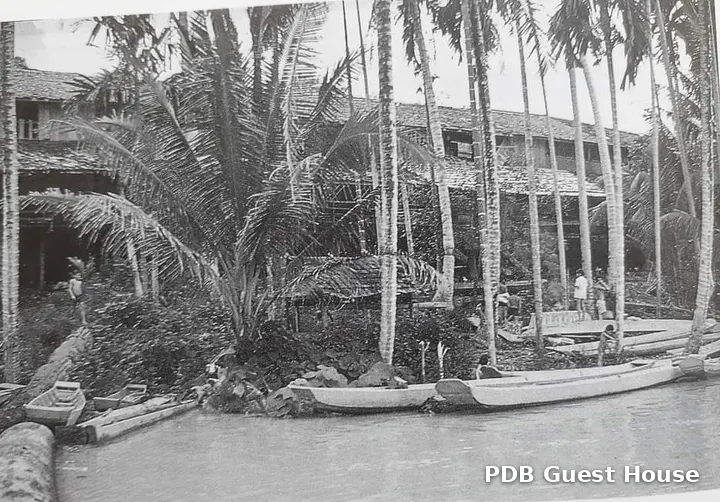
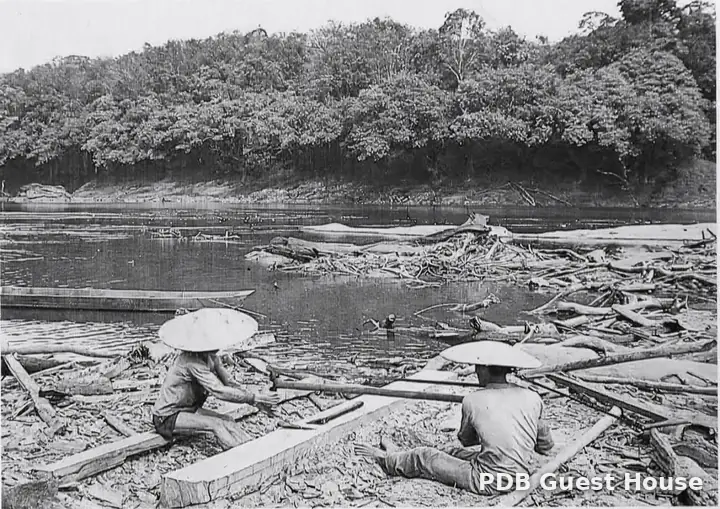
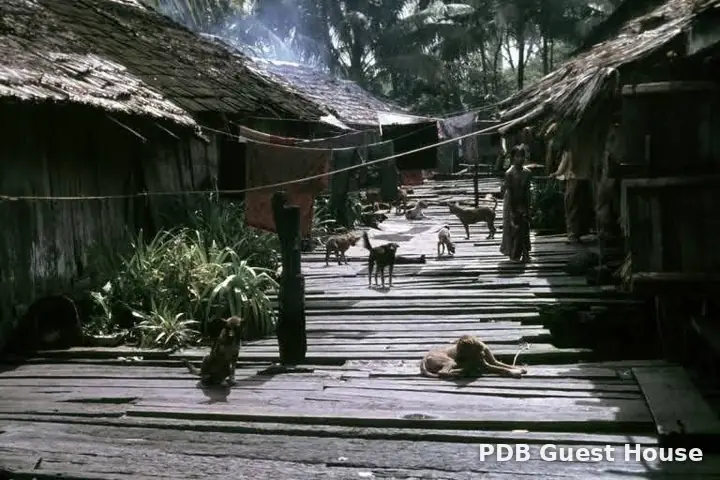
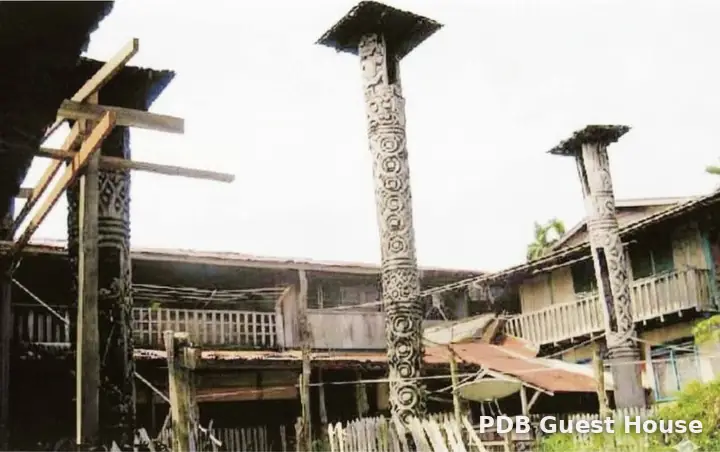
Village life, stunning nature and scenery, the Rajang River and our ancient Kelirieng burial poles. Every stay directly sustains our village economy and cultural preservation.
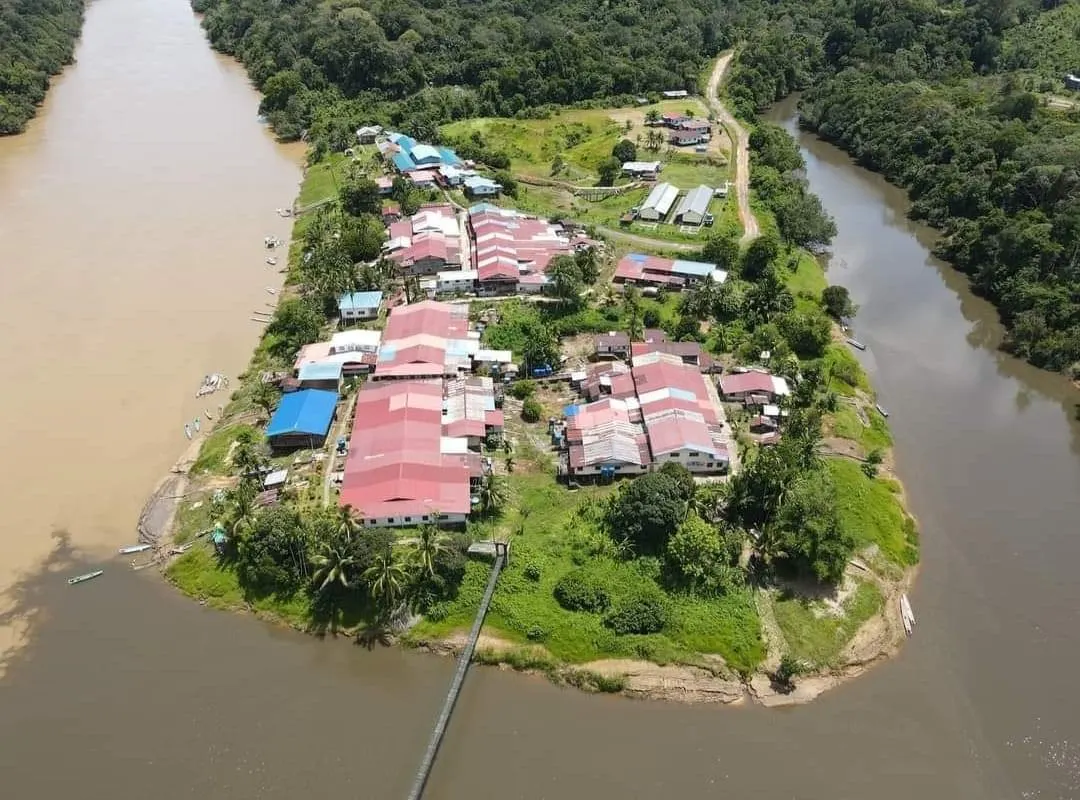
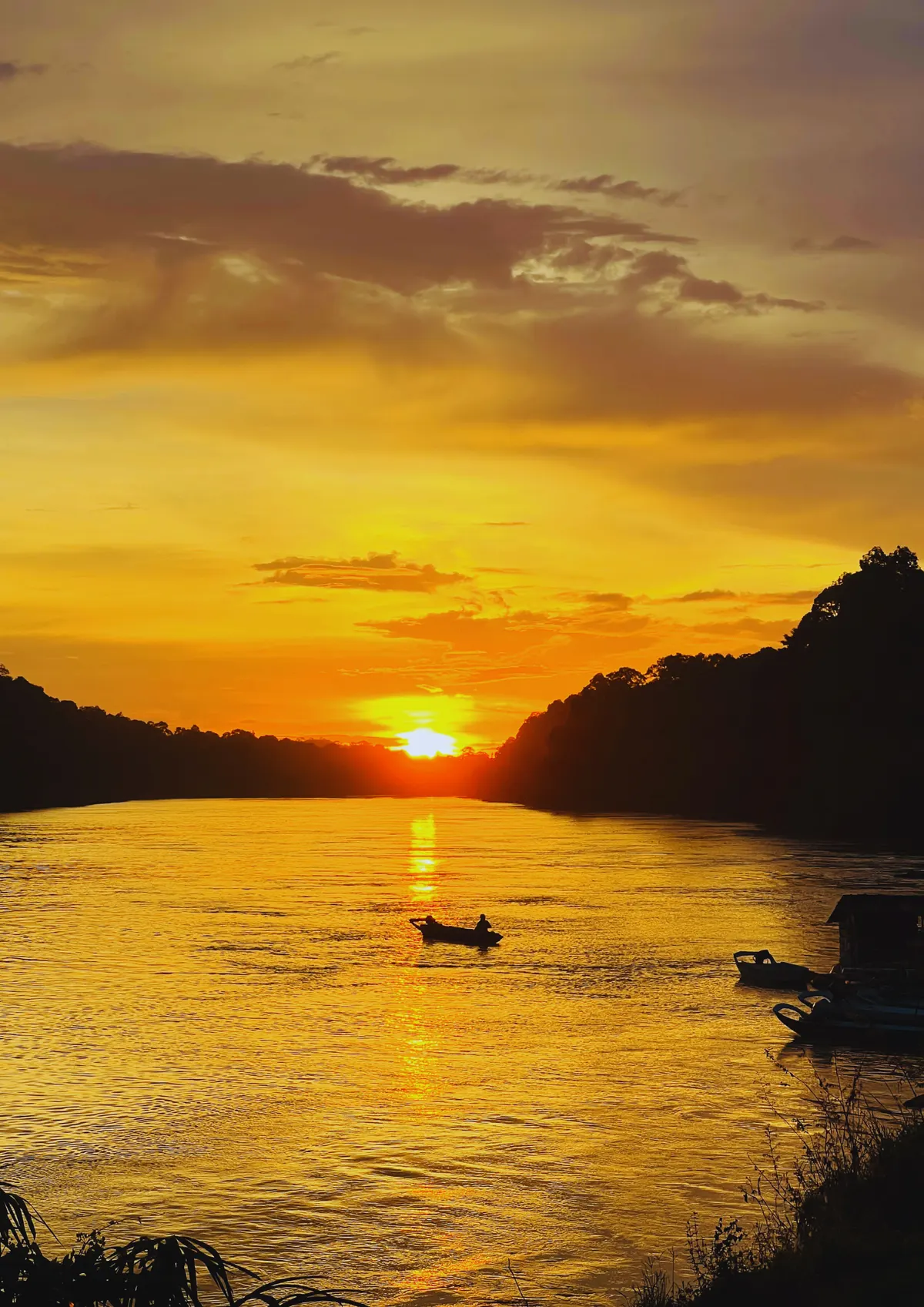
See more photos: The Beauty of Nature At Punan Data Ba
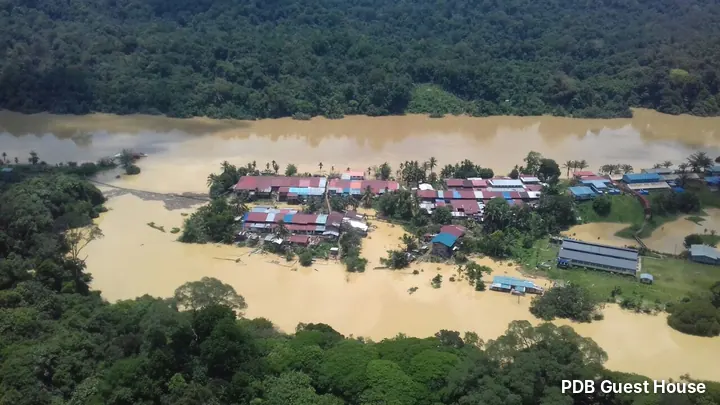
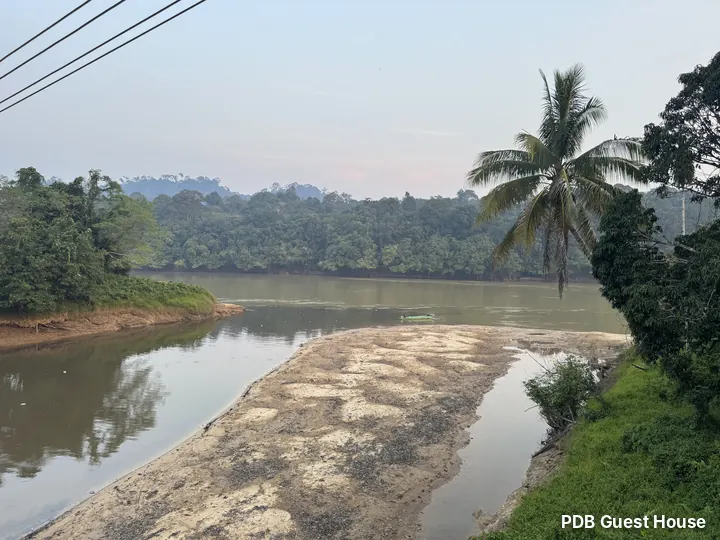
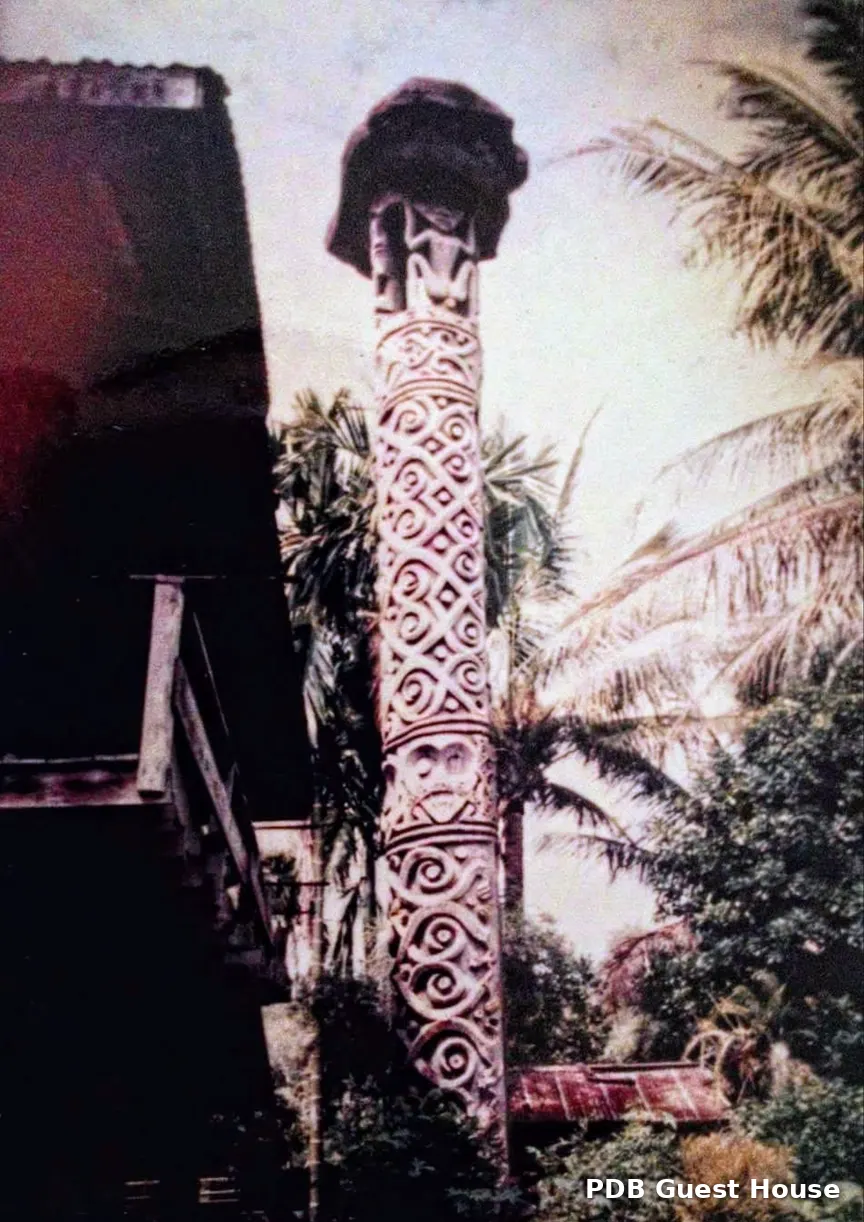
The Old photos of Punan Ba/Punan Data Ba
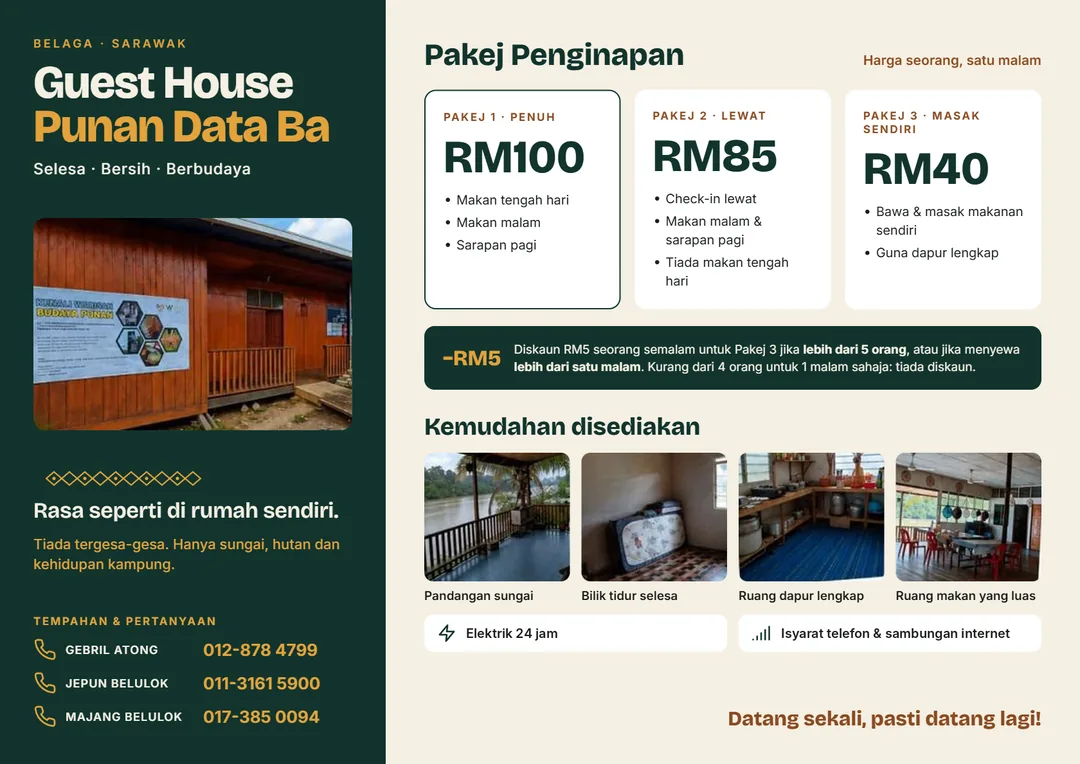
Our guest house flyers
Our packages, prices and contacts in English and Malay. Download a flyer to keep or share.
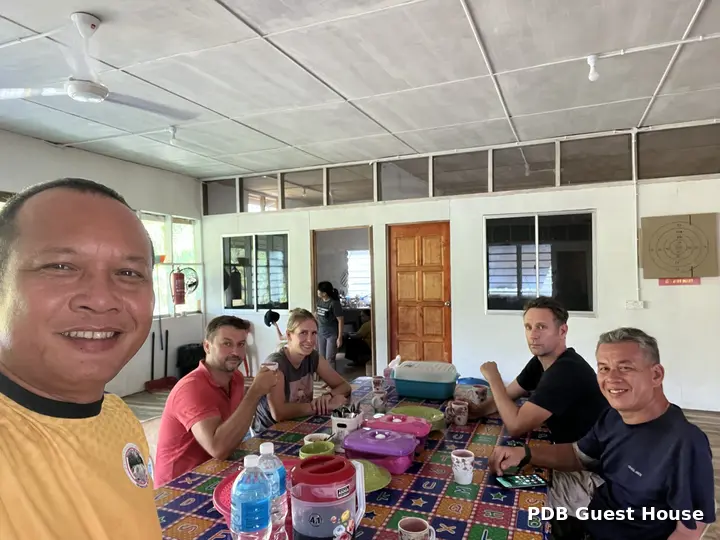
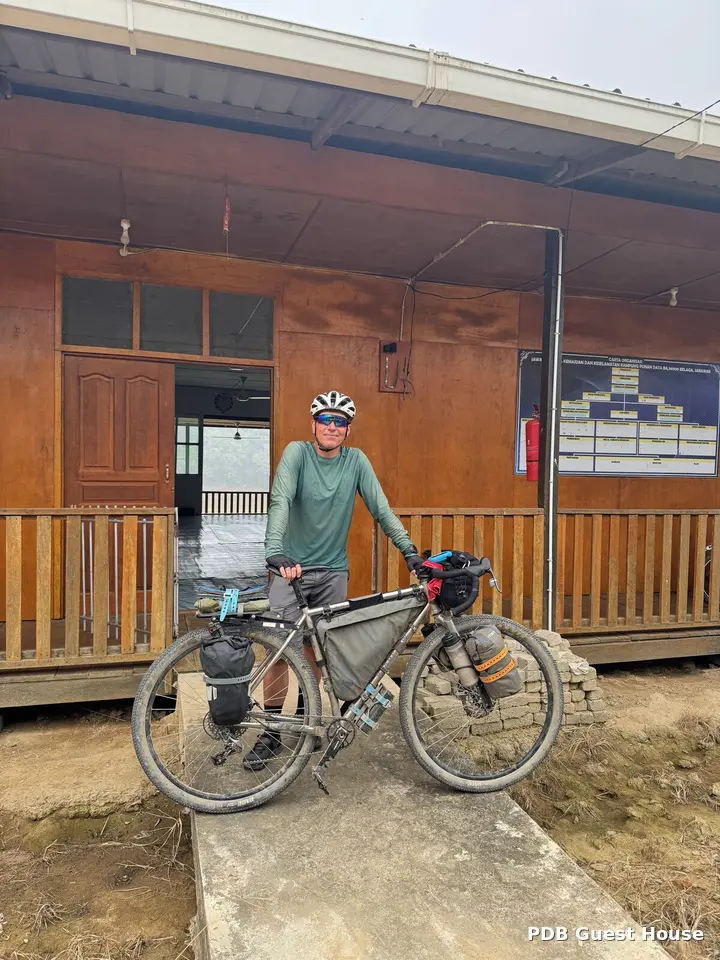
Our Guests and Visitors
Friends from near and far who have visited and stayed with us.
Who we are
Punan Data Ba is a community of the Punan Ba people in Belaga, Sarawak. We were once part of the Punan Ba longhouse, but we chose to form our own longhouse administration, with our own Longhouse Chief and our own village development and security committee (JKKK). We still live at the same longhouse site as Punan Ba. Only the administration is separate.
Today, Punan Data Ba is home to 30 Punan families. Over the years, many of our families have married people from other communities across Sarawak and the rest of Malaysia. The largest of these groups is the Iban, followed by the Kayan, Kenyah, Malay and Chinese. This blend of cultures gives Punan Data Ba a colourful, harmonious identity that we are proud to share with our guests.
Punan Ba or Punan?
In the old days, our people called themselves Punan Ba, after the Ba river basin, our ancestral homeland. The name told others where we came from. Hundreds of years ago, our ancestors moved out of the Ba basin and settled in new places along the rivers of central Sarawak: Biau, Sama, Kakus, Pandan (Sebauh) and Jelalong.
Today, most of our people prefer to be known simply as Punan. One reason may be that our younger generations have lived in their present longhouses for a very long time, and the Ba basin now feels like a distant memory rather than home. Whether we say Punan Ba or Punan, it is the same proud people with the same roots.
The Punan Ba people
Our people live in Belaga District, in Kakus in Tatau District, and in Pandan and Jelalong in Sebauh, Sarawak. Our name comes from the two rivers our ancestors have lived along for generations. The Punan Ba, or simply Punan, are a sub-group of the Kajang community of the upper Rajang River. There are about 6,000 of us today.
We are often confused with the Penan, but we are a completely separate people, with our own history, language and customs.
Traditionally, we have always been settled farmers. We clear and plant hill rice, which we call menanok, along with sugar cane and tobacco, and we hunt in the forest for food such as wild boar.
Watch: Kampung Punan Bah, Belaga, Sky View, April 2025 (YouTube drone video by GMIE EMIE, 7 min)
How we differ from the Penan
Settled, not nomadic. The Punan have never been nomadic. The Penan, by contrast, were traditionally hunter-gatherers who moved through the forest. Under Sarawak law, the Penan, Punan Aput and Punan Busang (Vuhang) are all classified as Penan, a separate group from the Punan of the Kajang community.
Death customs. This is one of the clearest differences. The Penan traditionally buried their dead very soon after death. We keep the deceased at home for a period of time, depending on the person's gender and social standing, and we also practise a secondary burial ceremony, which is where our Kelirieng poles come in.
Social structure. In the past, Punan society was organised into classes: aristocrats and royalty at the top, then commoners, and slaves at the bottom.
Our Kelirieng poles
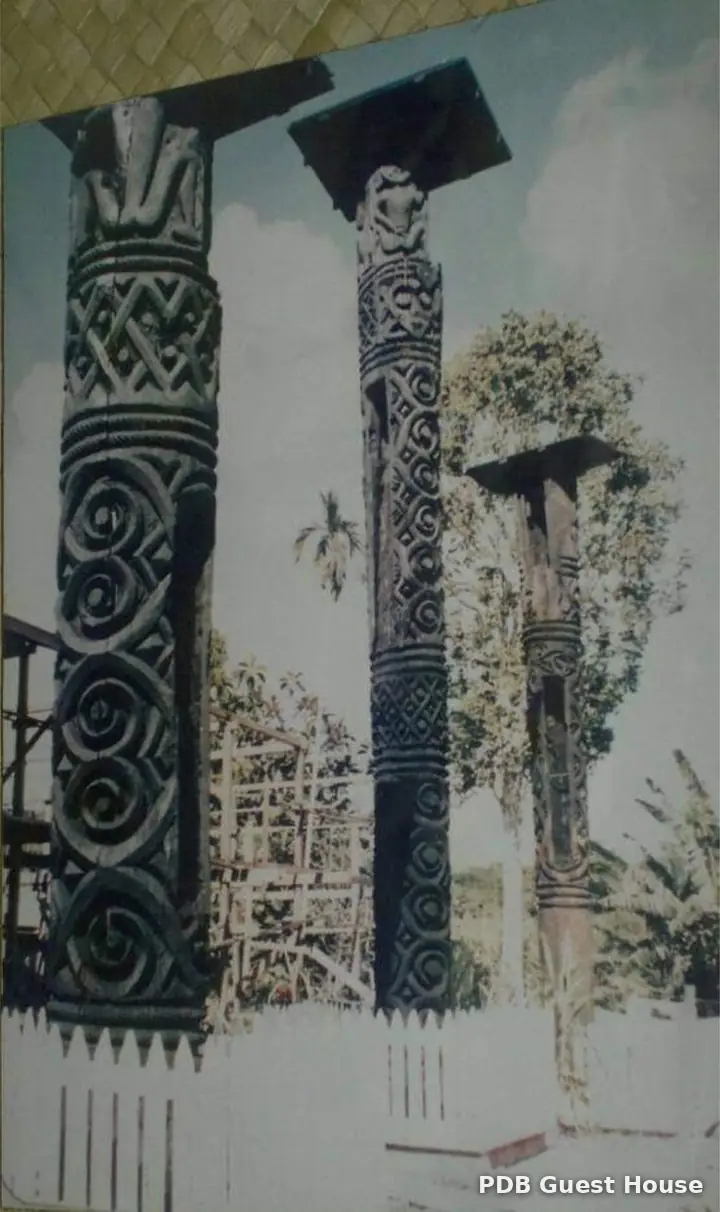
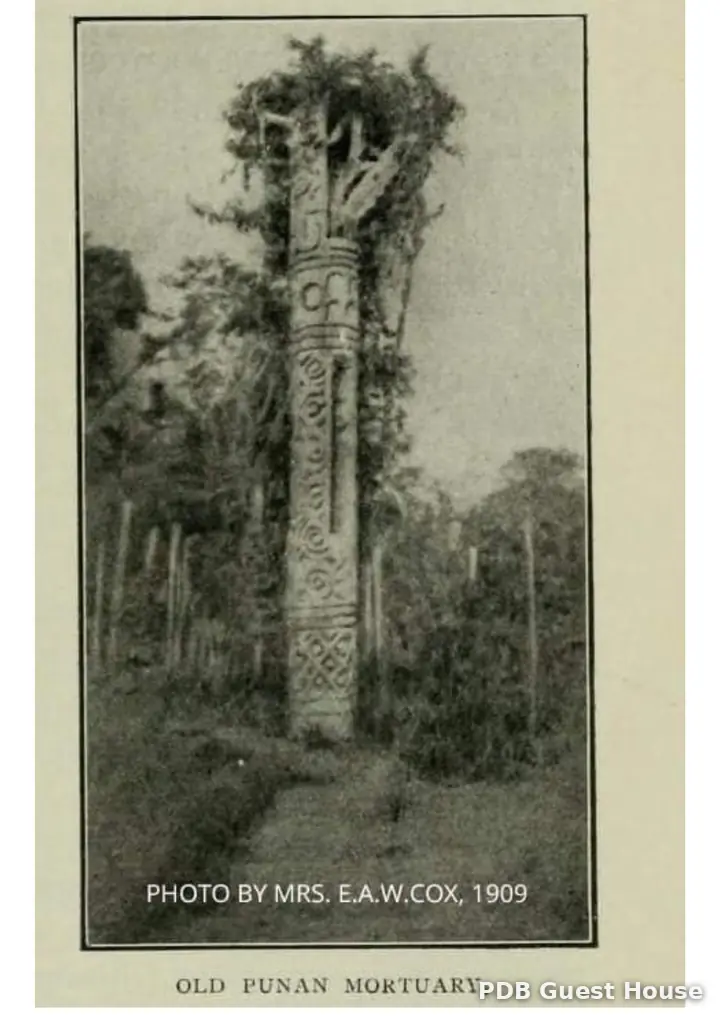
The Kelirieng are among the proudest parts of our heritage, and some can still be seen today. They were never made for just anyone. Each one was raised for a beloved leader or aristocrat, usually as part of a secondary burial held about a year after the person's death.
Each pole was carved from a single trunk of belian, the Bornean ironwood also known as kayu besi, one of the hardest woods in the world. Very few Kelirieng remain. Several were lost to fire and the forest over the years, and some from along the Rajang were given to the Sarawak Museum and the National Museum in the 1960s and 1970s, where they can still be seen.
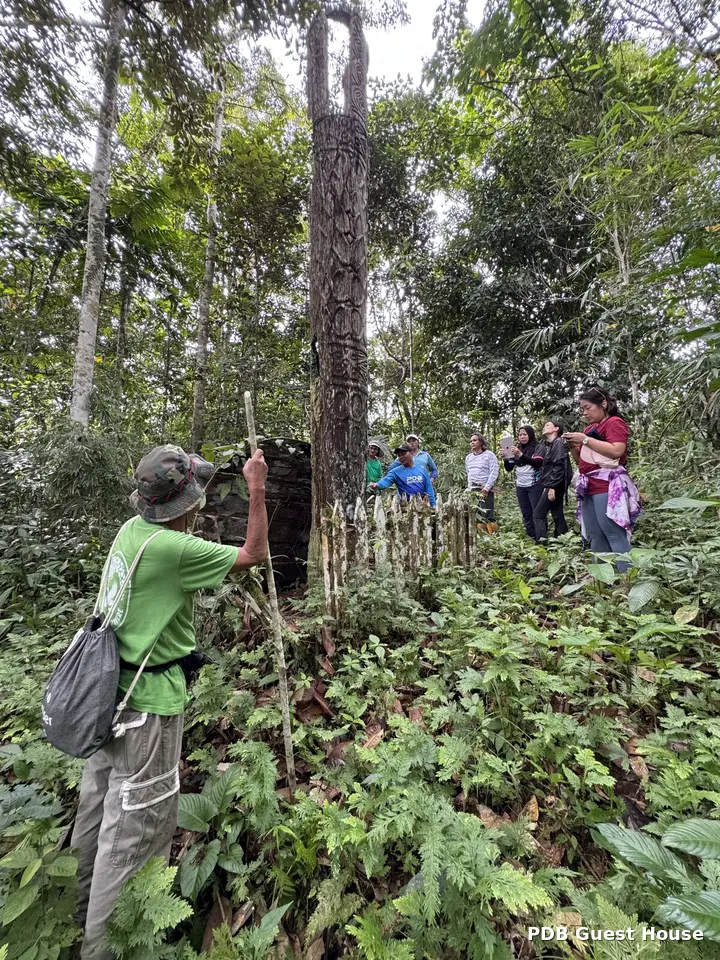
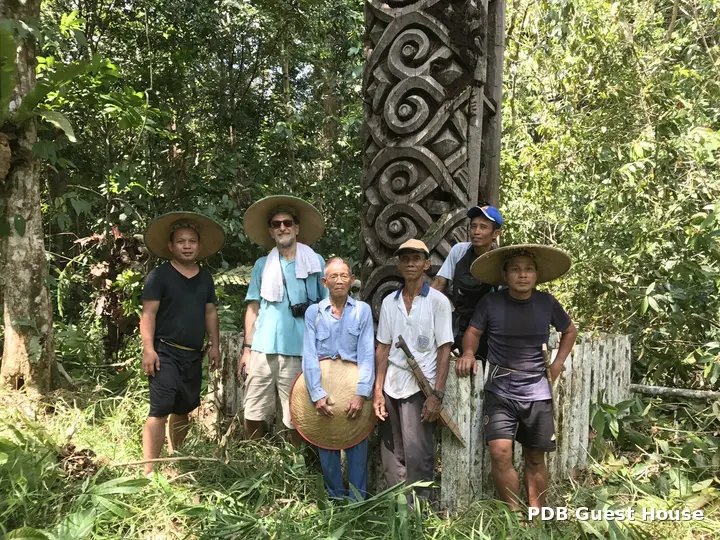
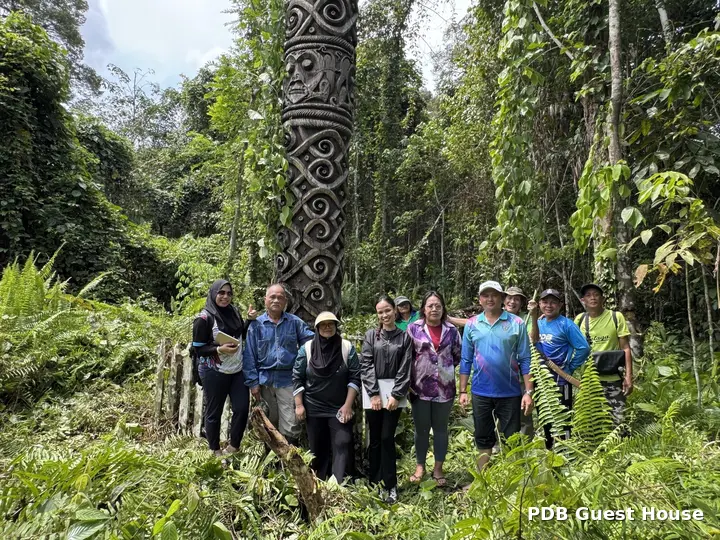
See photos: Kelirieng Research and Conservation
Watch: Klirieng: The Lost Sky Tombs of the Punan (YouTube video by Nibung Mali, 2026, 8 min)
How to get to Punan Data Ba
Punan Data Ba is on the Rajang River, near Belaga in central Sarawak. There are three ways to reach us: by road and express boat from Sibu, or by road from Bintulu.
-
From Sibu, by road and express boat
- Sibu
- Kapit
- Punan Data Ba
Travel from Sibu to Kapit by private car or by bus. In Kapit, take the express boat up the Rajang River to Punan Bah, the longhouse site Punan Data Ba shares with Punan Ba.
Express boat times (from 20 July 2026)
Kapit → Punan Bah 10.30 am Punan Bah → Kapit 9.00 am Express boat Soon Soon 318. The Kapit–Belaga service now runs Kapit–Punan Bah–Kapit (Sarawak Rivers Board notice).
Please contact us to check the latest express boat times before you travel.
-
By 4WD from Bintulu (off-road)
- Bintulu
- Samarakan Junction
- Jalan Kelebu
- Rumah Ado Junction
- Old KTS Road
- Samling Road
- Lana Kem B
- Punan Data Ba
From Bintulu, turn off at Samarakan Junction onto Jalan Kelebu. At Rumah Ado Junction, join the Old KTS Road, then the Samling Road, and pass Lana Kem B on the way to Punan Data Ba.
A 4WD vehicle is a must: much of this route is off-road.
-
By road from Bintulu, through Belaga Town
- Bintulu
- Bakun Junction
- Menjawah Junction
- Belaga Town
- Jalan Jiwa Murni
- Punan Data Ba
From Bintulu, drive to Bakun Junction and on to Menjawah Junction, then to Belaga Town. From Belaga, follow Jalan Jiwa Murni to Punan Data Ba.
Need help planning your trip? Call or WhatsApp us using the details below, and we will be happy to help.
Contact us
Message us on WhatsApp or call to book your stay.
- WhatsApp and phone
- +60 12‑878 4799
- Address
- Punan Data Ba, 96900 Belaga, Bahagian Ke-7 Kapit, Sarawak
- Hours
- Any time, every day. Replies may sometimes be slow because the phone signal can drop out.